
What is Knowledge Management?
Published on: December 10, 2019, Submitted by Emilie Vansant on: December 9, 2019
A brief overview of the two-day regional workshop, "“Bridging Knowledge Creation and Sharing for Natural Resource Management and Climate Resilience," sponsored by IFAD through the cross-regional project, "Strengthening Knowledge Management for Greater Development Effectiveness in the Near East, North Africa, Central Asia and Europe"
National Workshop "Bridging Knowledge Creation and Sharing for Natural Resource Management and Climate Resilience", Rabat, Morocco, 13-15 November 2019
What is Knowledge Management? Perspectives from Rabat as a New Recruit
The day after signing my contract at ICARDA as a Knowledge Management (KM) Research Fellow, I boarded a plane to Rabat, Morocco. Although my new position is to be remote-based, I had the unlikely opportunity to be a last-minute attendee at the “Bridging Knowledge Creation and Sharing for Natural Resource Management and Climate Resilience” Regional Workshop, hosted by the Institut Agronomique et Vétérinaire Hassan II.
This event was organized by ICARDA as part of a 4-year project, titled "Strengthening Knowledge Management for Greater Development Effectiveness in the Near East, North Africa, Central Asia and Europe,” funded by IFAD (International Fund for Agricultural Development). The project also works with international partners Virginia Tech, CIHEAM-Bari, PROCASUR as well as National Agricultural Research Systems (NARS), governments, and agricultural extension services in Moldova, Morocco and Sudan. Initiated in June 2018, the project facilitates and supports KM and capacity development activities in the three selected countries (with the possibility of extending to a further two) and will provide practical examples of KM best practices that will be analyzed and adopted by participating institutions. For more background information on the project and its partners, check out the official website here.
The project brings together these disparate institutions and stakeholders under the primary goal of promoting the development of KM skills and fostering knowledge exchange within countries, across countries, and between regions. This regional workshop in Morocco therefore provided an opportunity for all parties to meet, organize, and exchange expertise. As this project is already a year underway, I found that as a newcomer I had a lot of catching up to do. In Rabat, I made it my mission to answer the following questions:
- What is Knowledge Management?
- Why is Knowledge Management important in Research for Development?
- What are best practices for Knowledge Management, and how are they used to help alleviate rural poverty?
The following is an account of the two-day regional workshop, an event attended not only by stakeholders central to the project, but also external institutions, including: IAV Hassan II, the Federal Ministry of Economic Cooperation and Development (BMZ), the Deutsche Gesellschaft für Internationale Zusammenarbeit (GIZ), The World Overview of Conservation Approaches and Technologies (WOCAT), the CGIAR Research Program on Livestock, and the CGIAR Research Program on Grain Legumes and Dryland Cereals.
Creating A Common Understanding of Knowledge Management
Within the opening presentation, project leader Dr. Akmal Akramkhanov gave a summary on the basics of KM in order to unite all participating institutions under a common understanding, providing a foundation on which to develop stakeholders’ institutional KM capacities, knowledge systematization and enhanced regional knowledge exchange.
Essentially, KM is a series of processes that enables an organization to effectively and systematically gather, develop, and share knowledge in order to achieve their desired objectives. This can be done through creating a system to manage the development of raw data into contextualized and condensed information; through processes of enhancement and application, this system then transforms information into knowledge to be shared with end-users:
Creating a Common Understanding of Knowledge Management
In order to ground some of these concepts within the contexts of different institutional objectives, over the following 2 days workshop attendees engaged in a series of knowledge exchange sessions. These presentations and workshops featured KM strategies and best practices within key thematic areas pertaining to the research interests of attending institutions, including: natural resource management, sustainable land management, conservation agriculture, livestock data, agricultural development solutions, and climate resilience.
The first day was devoted to developing Communities of Practice (CoPs) concerning KM development across thematic areas corresponding to the interests of participating institutions: Sustainable Land Management, Livestock, and Traditional Knowledge. Here, stakeholders were free to choose and participate in one of the three established CoPs. These meetings, facilitated by members of the ICARDA Project team, involved presentations from key representatives with KM projects in each thematic area. Presentations were followed by group discussions in order to share critical observations and feedback, as well as develop a general plan for further activities within each CoP.
There are certain challenges inherent in forming partnerships between stakeholders from disparate cultural and institutional backgrounds. Therefore, it was important to have the support and expertise leveraged by representatives from the project’s implementing partners: Virginia Tech, PROCASUR, and CIHEAM-Bari. Through their participation, these institutions provided external support (outside of the three target countries) to the formation of a common goals between the stakeholders within each CoP and to the formation of long-term objectives through domain-based knowledge frameworks, tools, and strategies for continuous learning.
Overall, it seemed that these multi-stakeholder workshops on Day 1 helped participants develop a better understanding of KM and why it is important in Research for Development: to optimize data flow within an institution and maximize research efforts to boost impact.
Participant Perspectives
Between events, participants shared their perspectives on KM and what they hoped to gain from this experience:
“Everything we do - innovations, science, must be transferred to the stakeholders...all of that is knowledge management. I hope here to gain new experiences and to share the experiences we gain here with our colleagues and our teaching staff in order to better deal with knowledge management at the university."
- Elena Scripnic, Vice-rector and Associate Professor, State Agrarian University of Moldova
“Knowledge management means developing, capturing, storing, and disseminating knowledge, all of these aspects together. And when you are managing the knowledge that means you are dealing with it in the right way. Here today we learn from one another, we can share our experiences because we are three countries in this KM project, Sudan, Moldova and Morocco, and I think we can do some valuable networking to prepare for future work as well."
- Mahmoud Mekki, Directorate of Technology Transfer & Knowledge Management, ARC (Sudan)
“Knowledge management is all of the processes of collecting, storing and sharing data. For me, these processes are important for any kind of institution because it helps the management easily find information, you can spread information easily, and you can even have some statistics about your information and how it was disseminated...Through the research, we [IAV] produce a lot of scientific information within our departments and labs but also through the students when they go out in the field, so we have to think about how to manage all of this information - to make it accessible within the scientific community but also for the end-users. We have to manage, but also promote and valorize this information. So the knowledge management process is very important for my institution.”
- Sanaa Zebakh, Deputy Director for Cooperation, Partnership, and Development, IAV Hassan II (Morocco)
Knowledge Symposium
The second day featured parallel sessions and presentations by project stakeholders, implementing partners, as well as students and scientists from external institutions (see above). These workshops helped build KM capacities for attending institutions by:
a) allowing presenters to demonstrate practices of knowledge dissemination
b) facilitating knowledge exchange between stakeholders
c) promoting best practices for KM in the context of alleviating rural poverty
For example, Dr. Jocelyn Jawhar of CIHEAM-Bari led a session on “Developing Opportunities for Young Entrepreneurs in Agri-business”, and discussed effective ways to engage youth in the agriculture sector through tailored trainings and knowledge exchange opportunities with professional entrepreneurs.
Professor Boris Boincean, of the Selectia Research Institute of Field Crops (Moldova), discussed a systematic approach to scaling up conservation agriculture practices using communities of practice and knowledge management strategies in order to create a positive impact on rural livelihoods. Dr. Cheikh Mhamed of INRAT (Tunisia) also led a session on conservation agriculture in North Africa, focusing on crop livestock integration systems and constraints to adoption, highlighting the need for greater research and extension to help develop and disseminate alternative forage options in drylands.
Dr. Stefanie Christman (ICARDA) led a group of PhD students in a round of presentations concerning their research on Farming with Alternative Pollinators (FAP) project in Morocco. The FAP project helps farmers gain higher net income through enhanced pollinator protection measures and cross-sector policy instruments for low and middle income countries. The students used this opportunity to practice both presenting their research to an audience of scientists from mixed disciplines and fielding questions from stakeholders looking to apply the knowledge in their own institutional contexts.
Mr. Udo Rudiger (ICARDA) led a presentation and workshop on the Mind The Gap project in Tunisia. The project addresses the common “adoption gap” that occurs when innovations and technologies developed for a certain purpose are not widely adopted by the target population. Generally, such a problem occurs when institutions have weak knowledge dissemination practices. Using randomized control trials, researchers tested four different types of agricultural extension packages with Tunisian smallholder farmers focusing on two technologies: a new barley variety and concentrated animal feed blocks. Extension packages were evaluated for efficacy and efficiency, using cost and adoption statistics as primary indicators.
While the final results of the experiment are awaiting publication, highlighting the efficacy/efficiency of the different tested extension packages, here is one of Dr. Rudiger’s general take-aways: the influence of socio-economic factors had less of an impact on technology adoption overall than the characteristics of the technology itself. For institutions, this reaffirms the need for a participatory approach to technology development (knowledge capture and transformation) and a farmer-to-farmer based approach to knowledge dissemination.
Finally, Mr. Enrico Bonaiuti (ICARDA), along with Mr. Innocent Bikara (ICARDA/WorldFish) and Dr. Murat Sartas (IITA) led a joint-session on Monitoring, Evaluation, and Learning (MEL) Efforts by Visualizing Impact. These sessions were designed to introduce stakeholders to KM strategies for projects, including: implementation of MEL activities, impact pathways, theories of change, and network analysis. The facilitators then encouraged attendees to apply these concepts to their own institutions in order to ensure effective knowledge exchange and improved understanding.
Overall, the symposium offered a rich diversity of workshops, providing ample opportunity for participants to learn about KM and see how KM strategies are applied in various institutional contexts. I look forward to future events of this nature as the project unfolds.
Acknowledgement
“Bridging Knowledge Creation and Sharing for Natural Resource Management and Climate Resilience” Regional Workshop. November 14-15, 2019
Organized by ICARDA, CIHEAM-Bari, Procasur, Virginia Tech, IAV Hassan II
Sponsored by IFAD through the project, "Strengthening Knowledge Management for Greater Development Effectiveness in the Near East, North Africa, Central Asia and Europe"
About the Author
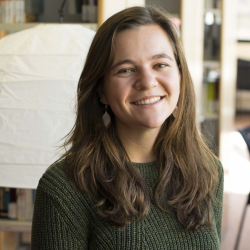
Emilie Vansant is a Knowledge Management Research Fellow at ICARDA.
Acronyms
|
CoP |
Community of Practice |
|
CIHEAM-Bari |
Centre International de Hautes Etudes Agronomiques Méditerranéennes – Bari |
|
FAP |
Farming with Alternative Pollinators |
|
ICARDA |
International Center for Agricultural Research in the Dry Areas |
|
IFAD |
International Fund for Agricultural Development |
|
IITA |
International Institute of Tropical Agriculture |
|
INRAT |
Institut National de Recherche Agronomique de Tunisie |
|
KM |
Knowledge Management |
|
MEL |
Monitoring, Learning and Evaluation |
|
NARS |
National Agricultural Research Systems |
CGIAR portfolios & Partners

Keywords
Countries

About the author